The Clause
The paper’s journey
Seventeen words crossed the Atlantic twice. Follow the clause from a letter in Norfolk to Congress, to Franklin at Passy, into the treaty, and back to Rockingham with the news, while Washington moves from the Hudson to the Millstone.
the paper and the ship that carries it · Washington · the envelope: the news, with Ogden · dotted lines: the usual sailing lanes, not the course steered
Summer 1782
A piece of paper, and the year it took
The clause that decided what happened to three thousand people at New York was seventeen words long. This page follows the paper that carried it: from a planter’s letter in Virginia to Congress, across the Atlantic to Franklin, into the treaty, and back again with the news. The ship and the paper are drawn; the dates are from the documents. A black dot follows Washington, whose own road ended at Rockingham, in Franklin Township, in the autumn of 1783.
Scroll, or press Play. Sea tracks are drawn on the usual sailing lanes; the documents give dates and ports, not the course steered.
August 23 and 30, 1782
It starts with a letter from Norfolk
Thomas Newton writes from Norfolk to Governor Benjamin Harrison of Virginia about enslaved people carried off by the British. A week later Harrison sends the complaint on to Virginia’s delegates in Congress at Philadelphia.
Newton to Harrison, August 23 · Harrison to the delegates, August 30
September 10, 1782
Madison’s motion
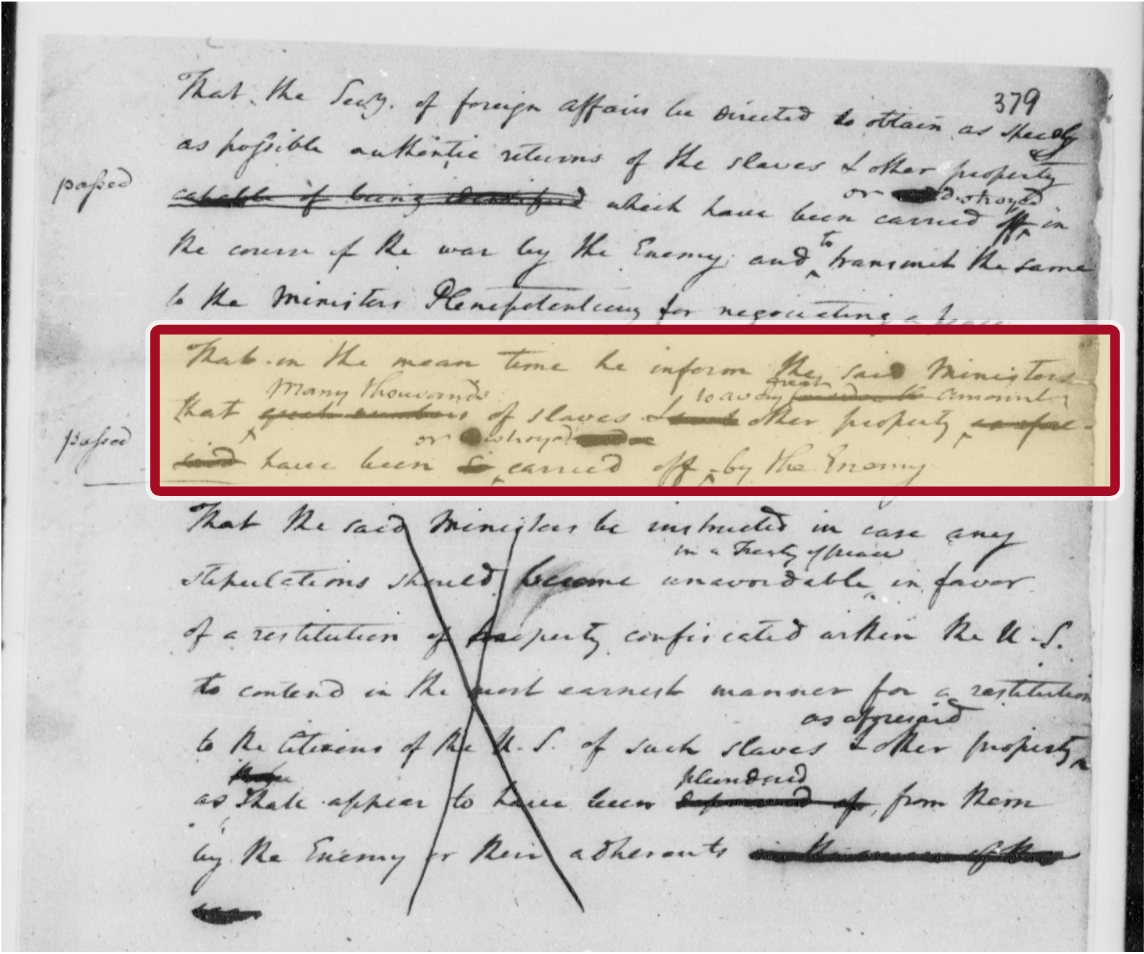
In the State House at Philadelphia, Congress adopts James Madison’s motion: “many thousands of slaves & other property” have been carried off, and the peace negotiators are to press for their return. Nine states vote aye; New Jersey and Maryland vote no.
September 12 to November 5, 1782
Across the Atlantic to Franklin
Robert R. Livingston, Secretary for Foreign Affairs, sends the resolution to Benjamin Franklin in his letters numbered 17 and 18, and a circular to the other commissioners. The paper is at sea for the better part of two months. It reaches Franklin at Passy, outside Paris, on November 5. John Adams and John Jay never acknowledged receiving it; the instruction reached the commission through Franklin.
November 26 to 30, 1782
Into the treaty
On November 26 Franklin copies Congress’s words into a letter to Richard Oswald, the British negotiator. Henry Laurens, lately released from the Tower of London, reaches Paris on November 29. On November 30 the clause goes into Article VII, written in between the lines, and the preliminary articles are signed.
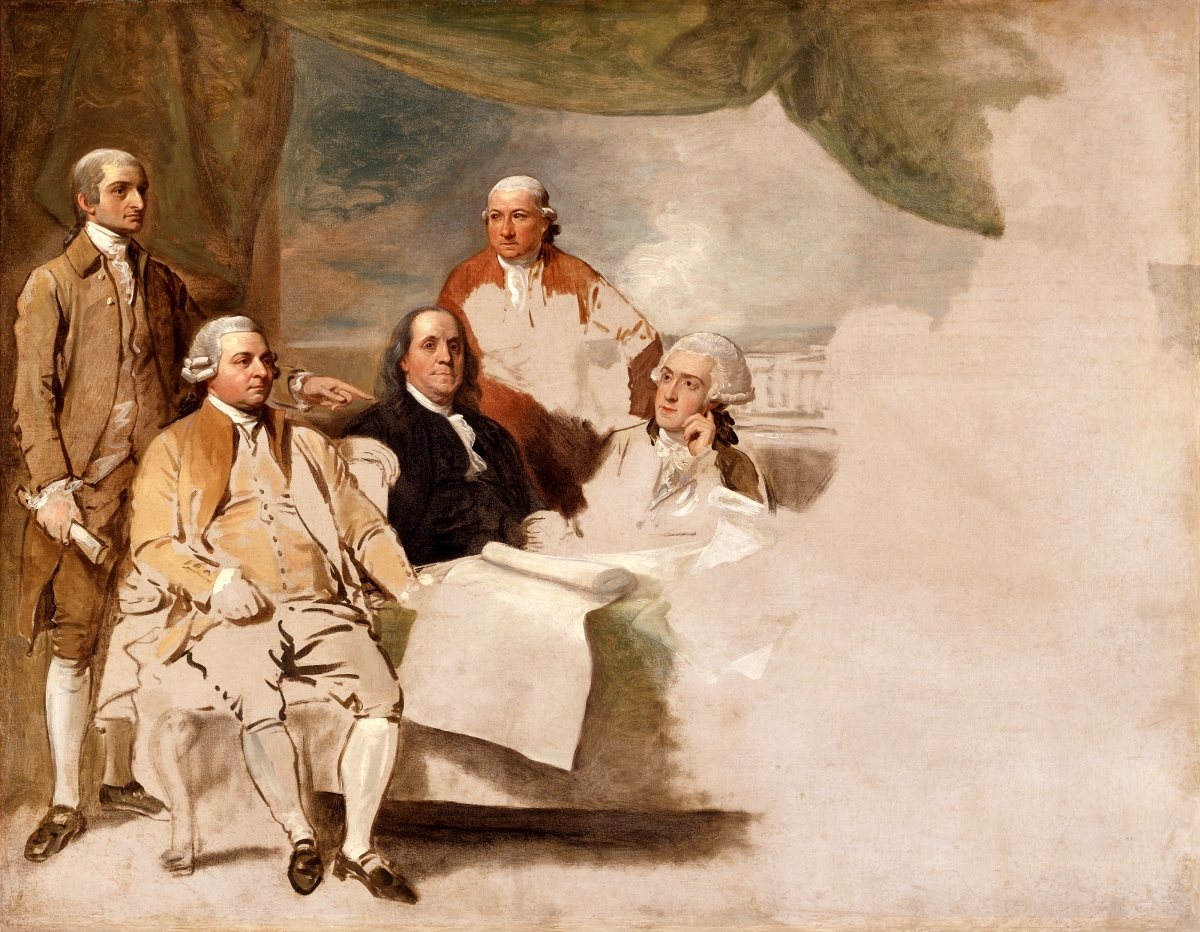
Franklin to Oswald · Adams’s diary, November 1782 · Laurens and Oswald
January 17 to March 12, 1783
The articles come home in the General Washington
Captain Joshua Barney sails from L’Orient in the packet General Washington on January 17, 1783, carrying Franklin’s dispatches of December 25 and the preliminary articles, under a British passport. The passage is hard. He reaches Philadelphia on the morning of March 12, and Elias Boudinot, the President of Congress, writes to Washington the same day.
Boudinot to Washington, March 12, 1783, and the editors’ notes to Barney’s letter to Franklin of January 7, 1783, at Founders Online.
April 11 to 23, 1783
Ceasefire, ratification, and the first ships
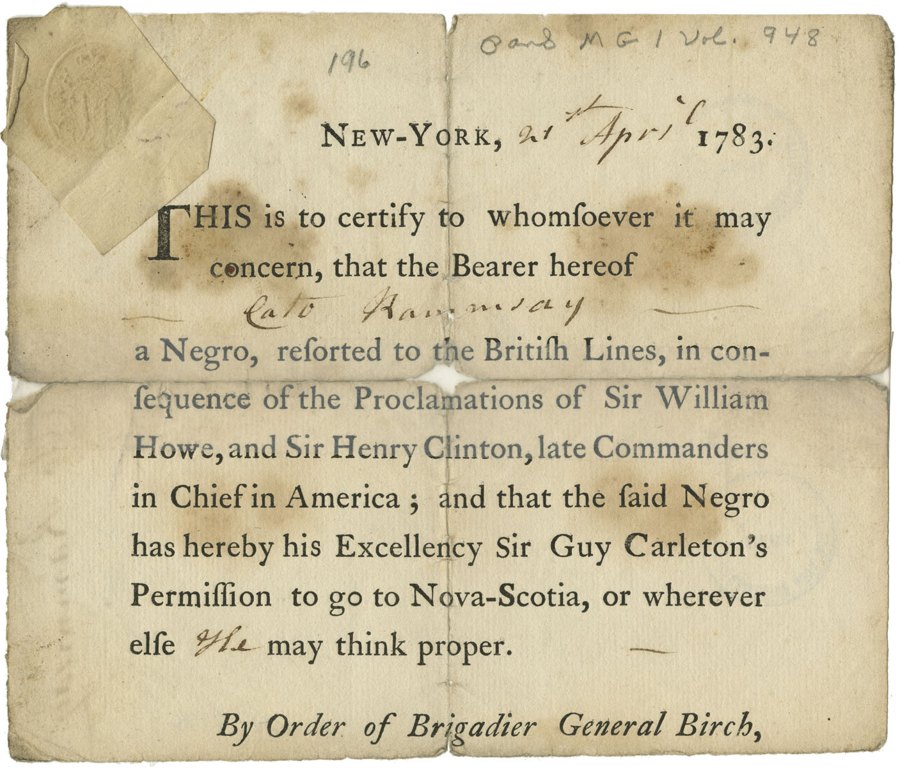
Congress proclaims the cessation of hostilities on April 11 and ratifies the preliminary articles on April 15. In New York the British begin issuing passes to Black people who had come within their lines, and the first transports sail on April 23. The clerks start the register.
May 6 and 26, 1783
Orangetown
Washington rides down from Newburgh to meet Sir Guy Carleton at Orangetown on May 6. Carleton says that upwards of six thousand people have already sailed, among them Black people, and that a register is being kept so that Britain can answer any claim later. On May 26 Congress calls the removals a breach of the articles and tells Washington to “continue his remonstrances.”
The substance of the conference · Washington to Carleton · Carleton’s reply · Congress, May 26
August 23, 1783
Rockingham
Congress is sitting at Princeton, in Nassau Hall. Washington comes down from Newburgh at its request and moves into Rockingham, the Berrien house on the Millstone at Rocky Hill, on August 23. The same day Virginia’s delegates write home about “the glaring infringement of the 7th Article.”
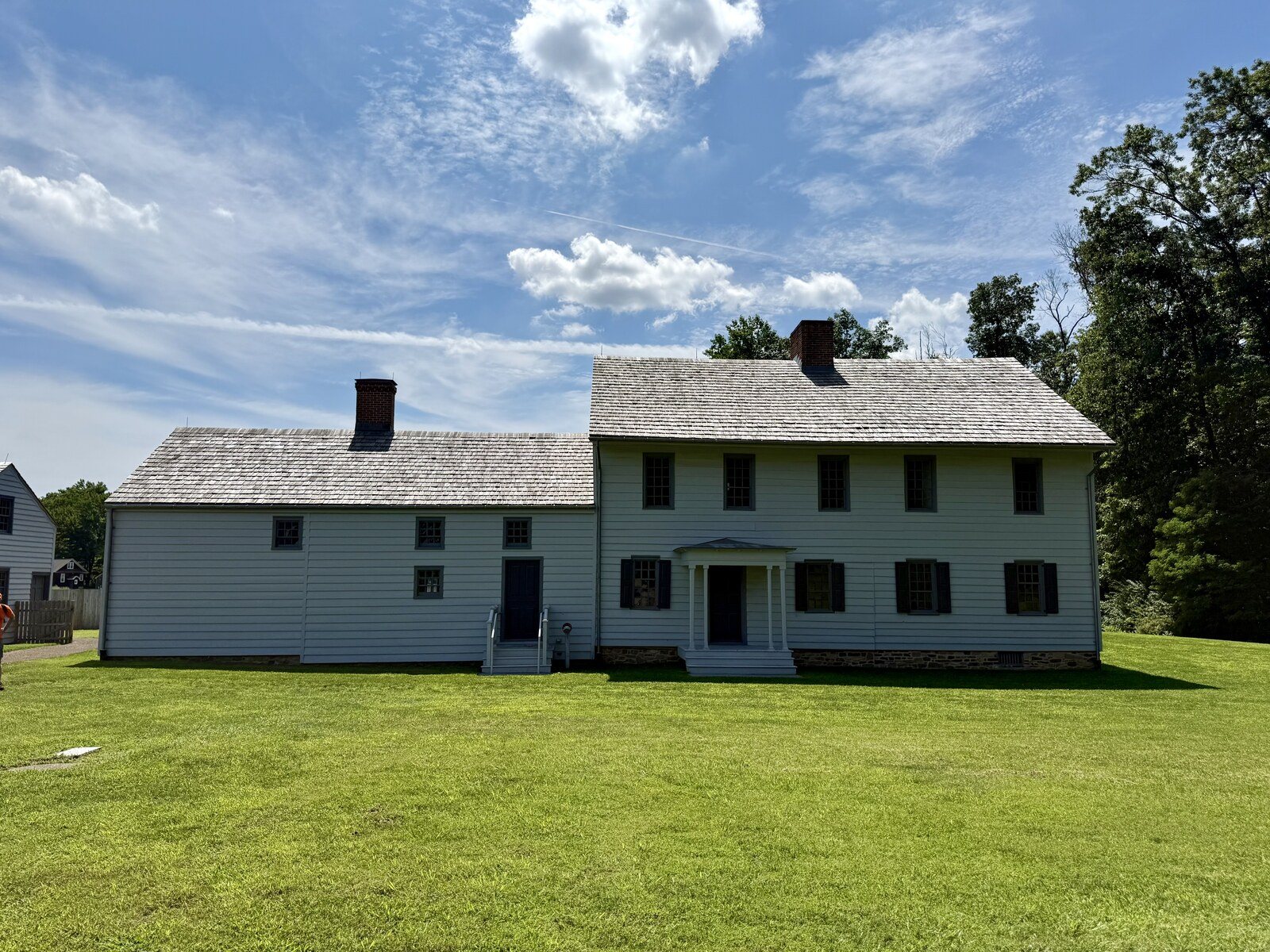
The delegates’ letter · Washington to Congress from Rocky Hill · One House
September 3, 1783
The definitive treaty
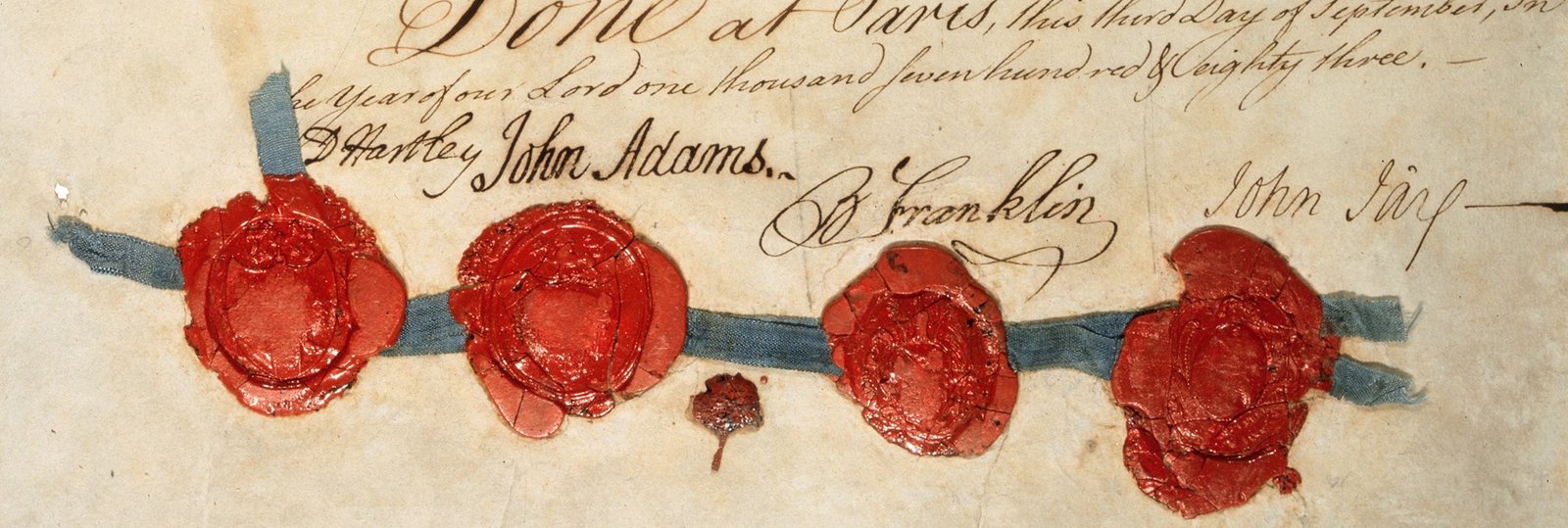
At Paris, David Hartley for Britain and John Adams, Benjamin Franklin and John Jay for the United States sign the definitive treaty. Article VII stands as it was agreed the previous November.
September 10 and 20, 1783
Two ships: the news, and the treaty itself
Colonel Matthias Ogden of New Jersey leaves Paris on September 10 carrying the news. The treaty itself goes separately: John Thaxter, Adams’s secretary, sails with it from L’Orient in the packet on September 20. The letter travels faster than the parchment.
October 30 and 31, 1783
The news reaches Rockingham
Ogden lands at Elizabethtown on October 30 and writes at once to Washington and to the President of Congress: “on the 3rd of Sept. the definitive treaty of peace was signed at Paris, which place I left the 10th following.” He adds that the L’Orient packet, with the treaty, has not yet come in. The news is read at Congress in Princeton on October 31 and reaches Washington at Rockingham the same day.
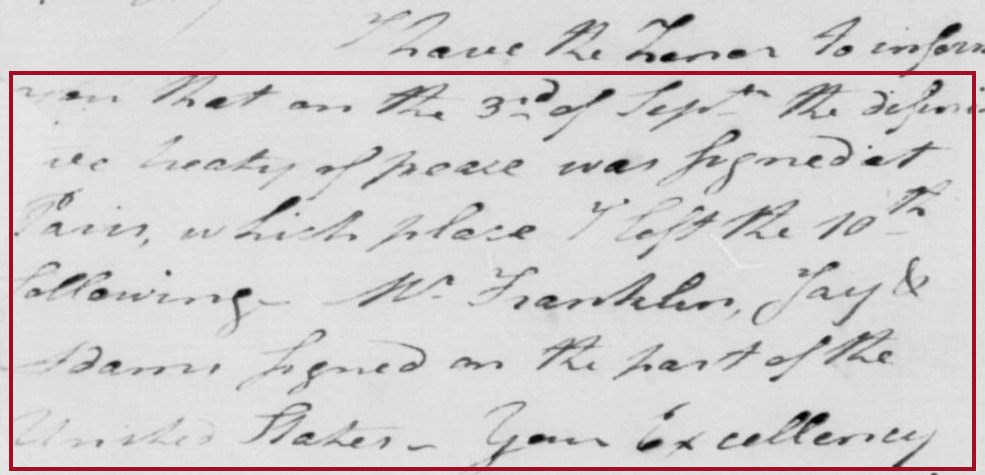
Ogden to Washington · Ogden to Boudinot · Washington to Rochambeau, the next day
November 10 to 30, 1783
The last ships
Washington leaves Rockingham on November 10 for the Hudson. Thaxter lands at New York and hands the treaty and dispatches to the President of Congress at Philadelphia on November 22. The British evacuate New York on November 25, and Washington rides in. The last sailing in the register is dated November 30.
January 14, 1784
Annapolis
Congress, now sitting at Annapolis, ratifies the definitive treaty on January 14, 1784. By then the people the clause was written about had been in Nova Scotia for months. Three thousand names were in a book; the book was the only thing that was ever restored.